 Heather Hofflich, DO
A whole bunch of different issues can cause sudden crashing fatigue in females, particularly in midlife. Perimenopause is a prime suspect, for one. But thyroid dysfunction, nutritional deficiencies like low iron levels, and other conditions can also leave you seriously craving your couch. If you’re banging your head against the wall, asking, “Why am I always tired and have no energy?” know that Midi Health clinicians are here to help you figure out the reasons for sudden extreme fatigue, as well as the best solutions for you.
Picture this: You’re in the middle of an afternoon work meeting when, once again, you’re hit with an overwhelming wave of exhaustion. Sudden crashing fatigue in females can turn simple tasks into major challenges. It’s impossible to concentrate. Your limbs feel like they’re full of sand. And your mood? Well, cranky is just the start of it.
It’s even more frustrating when your blood work looks normal, and logging a solid 7 to 9 hours in bed seems to do nothing to fix the problem.
We’re here to tell you that sudden episodes of extreme fatigue are a real pattern in midlife.
“It's easy to talk ourselves out of its significance and say, ‘Well, my kid was sick last week’ or ‘I had this presentation at work,’” says Midi Health clinician Shelly Latte-Naor, MD, ABIM. “Unfortunately, people walk around with fatigue for a while before they talk to a healthcare professional.”
For many women in their 40s and 50s, the hormonal ups and downs of perimenopause are often to blame. But a number of common and treatable medical conditions can also cause sudden extreme fatigue—a few of which call for a prompt conversation with your doctor.
Read on to learn more about why perimenopause can mess with your energy, other potential culprits of fatigue, red flags to watch for, and how a menopause-informed clinician (like one at Midi) can help you figure out what’s going on.
What Does Sudden Crashing Fatigue in Females Actually Feel Like?
Sudden crashing fatigue can affect your mind, body, or emotions, Dr. Latte-Naor says—or a combo of those. You might feel heavy and exhausted for hours after an easy workout. Or you might have to rely on writing things down, when before you could remember everything in your head. Simple tasks that you used to breeze through suddenly feel incredibly stressful.
The difference between crashing fatigue and everyday tiredness is that it’s not just a day of low energy after a bad night’s sleep or an extra-hard gym session.
“It's longer lasting. It becomes a feature rather than an exception,” Dr. Latte-Naor says.
Why Is Perimenopause a Leading Cause of Crashing Fatigue in Women?
Hot flashes may be the most stereotypical sign of perimenopause. But a large recent study of perimenopausal women found that physical fatigue and mental exhaustion may actually be far more prevalent, each affecting a whopping 83% of survey respondents.
Sudden extreme fatigue usually shows up before other perimenopause symptoms, Dr. Latte-Naor adds, likely because one of the first hormones to fluctuate is follicle stimulating hormone (FSH).
“There's some data to suggest that, even without changes to estrogen or progesterone, FSH can have an impact on sleep patterns,” she explains. That’s soon followed by a drop in progesterone, a hormone that calms you down.
“When we lose that, we can notice a change to our sleep quality, which, of course, translates into feeling less rested,” Dr. Latte-Naor says.
Later, estrogen goes on its own roller coaster, messing up your production of serotonin, which regulates the sleep-wake cycle. Mood shifts make it tricky to wind down, then your internal thermometer goes berserk, leaving you soaking in sweat at 3 a.m.
The result? You get worse sleep overall, even if you spend just as much time in bed, and you feel exhausted the next day. That can increase cortisol levels, triggering more severe hot flashes and creating a mean cycle.
And then the next week your hormones will shift, you’ll feel totally fine, and the whole experience will feel like a made-up fever dream.

Could It Be Your Thyroid?
Fatigue is a tell-tale symptom of an underactive thyroid, aka hypothyroidism. This condition affects as many as 18% of women in perimenopause, research shows.
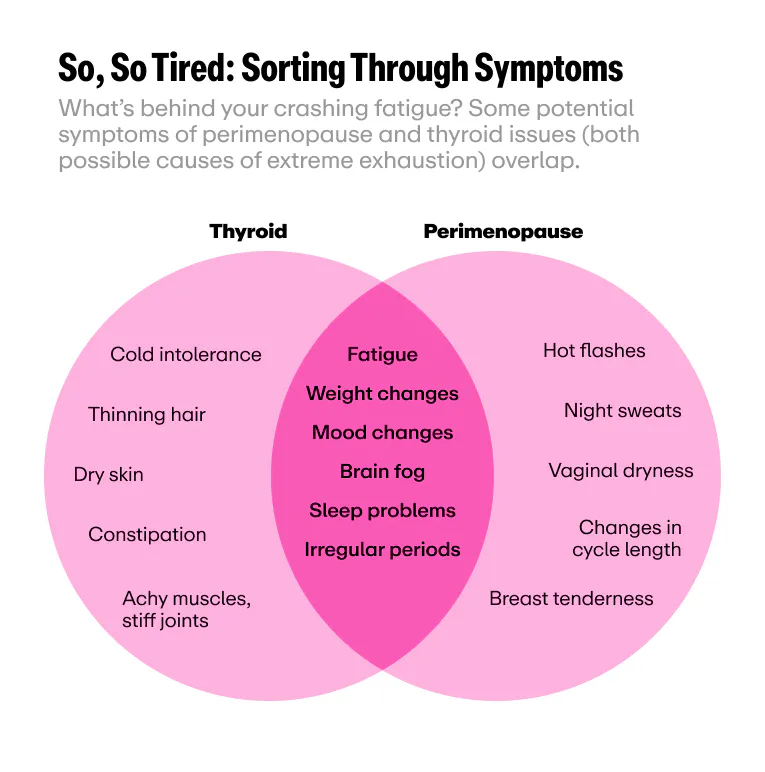
But it can be difficult to catch in midlife women, since many of the symptoms mimic what you may already be experiencing in perimenopause: fatigue, cold intolerance, weight gain, difficulty concentrating, low mood, dry skin, thin hair, and constipation.
If your clinician suspects a thyroid disorder, they’ll likely check your blood for levels of various thyroid hormones (TSH, free T4, and T3). Sometimes, they’ll order a thyroid antibody test to check for Hashimoto's thyroiditis, an autoimmune disorder. It’s the most common cause of hypothyroidism in the United States.
The good news? Thyroid disorders are usually very treatable once you get diagnosed.
Iron Deficiency and Anemia: An Underestimated Cause
Research shows that 34% of women ages 18 to 50 are deficient in iron. Perimenopausal menstrual cycles can increase the risk, thanks to heavy and irregular bleeding, which means extra iron loss.
This can lead to low ferritin (indicating depleted iron stores) and iron-deficiency anemia, a more advanced stage where you have so little iron that your body has a hard time making hemoglobin, leading to low red blood cell levels.
Even if your red blood count is normal, not having enough iron stored up can tank your energy because the mineral is essential for muscle function, brain chemistry, and energy metabolism.
Other symptoms of iron deficiency include:
- lightheadedness or weakness
- pale skin
- fast heartbeat
- restless legs
- thinning hair
- brittle nails
- difficulty concentrating
- unusual cravings (often for ice)
To check for iron deficiency, clinicians typically order a complete blood count (CBC) and a ferritin test. Make sure you wait for the results before taking an iron supplement—too much iron comes with its own risks.
True Stories Of Transformation
Sleep Apnea and Other Sleep Disorders Women Often Miss
Sleep apnea is often seen as a man’s problem, but it shouldn’t be.
“The challenge is that many women don't get diagnosed because it often doesn't present as dramatically in women as it does in men with a loud, persistent snoring,” Dr. Latte-Naor says.
It’s usually a lot more subtle: Women might wake up with a dull headache or feel like they have no energy during the day. Although a screening questionnaire can raise suspicions, Dr. Latte-Naor says the only way to truly test for this is with a sleep study, either in a lab or at home.
Other sleep concerns like restless legs syndrome, chronic insomnia, and circadian disruption from shift work or an inconsistent schedule can also leave you reaching for cup after cup of coffee. Worth trying: natural remedies for menopausal sleep problems that can sometimes help, like cognitive behavioral therapy and some supplements.

Blood Sugar, Cortisol, and the Afternoon Crash
It’s no surprise that between taking care of family, work obligations, and a body going through perimenopause, midlife women often experience chronic stress. What many women don’t realize, though, is that constantly being in this fight-or-flight state can wear out the body, leading to the sudden crashing fatigue that females know all too well.
This happens for a few reasons. For starters, higher cortisol (the stress hormone) can raise blood sugar levels, worsening post-meal spikes and crashes that leave you feeling like you’re in a food coma. Plus, insulin resistance is more likely in midlife, thanks to shifting hormone levels and a loss of muscle mass. (For what it's worth, eating meals that pair complex carbs with protein and fat throughout the day can help blunt these crashes, though it won’t solve the problem long term.)
Note: Although TikTok may have you wondering whether you’re struggling with “adrenal fatigue” (where chronic stress has supposedly used up all your cortisol), that’s not actually a recognized medical diagnosis, Dr. Latte-Naor says: “Our adrenals don't ‘run out’ of cortisol.” However, she adds, there is a theory that the hypothalamic pituitary adrenal axis can get disrupted by persistent stress, so your response to stress can become less effective.
A clinician might investigate whether there’s a genuine adrenal disorder going on if they see atypical blood pressure (either too high or too low), dramatic weight gain or loss, or significant changes in energy levels.
Other Causes Worth Ruling Out
A few other possible causes can lead to crashing fatigue in perimenopause:
- Low levels of vitamin B12 or vitamin D: Deficiencies in both vitamin D and B12 are common and easily checked with a blood test.
- Depression or anxiety: Fatigue is one of the most noticeable symptoms of both of these mood disorders.
- Weight gain: Body composition changes in midlife often lead to a decrease in energy levels, Dr. Latte-Naor says.
- Post-viral fatigue: Long COVID, reactivated Epstein-Barr virus, or myalgic encephalomyelitis/chronic fatigue syndrome can leave you feeling exhausted.
- Dysautonomia: Nervous system disorders like postural orthostatic tachycardia syndrome (POTS) can cause sudden fatigue and other symptoms.
- Medication side effects: Some medications, including beta blockers, certain antihistamines and antidepressants, and semaglutide, can make you extra tired.
Red Flag Symptoms: When Should You See a Clinician Right Away?
The vast majority of the time, sudden crashing fatigue in females has an identifiable cause and a workable solution.
But this specific set of accompanying symptoms should be checked out ASAP:
- new chest pain
- significant shortness of breath at rest
- fainting or near-fainting
- new vision changes or trouble speaking
- rapidly progressive weakness
- numbness on one side of the body or facial drooping
- severe, unintentional weight loss
- dark, tarry stools
- decreased alertness
- visible, labored distress
Note that, in women, heart attacks can look different than classic crushing chest pain that’s more common in men (though some chest discomfort can happen). Extreme fatigue can be an early warning sign, and women are more likely to experience back or jaw pain, nausea or vomiting, and breathing difficulties when having a heart attack. When in doubt, call 911 or have someone take you to the ER.
Overall, don’t assume your fatigue is “just hormones”—talk with your clinician when you’re concerned.
What Does a Fatigue Workup Actually Involve?
Clinicians will typically start a workup by asking a number of questions: whether your fatigue comes on gradually or quickly, what your menstrual history is, what your sleep and general mood are like, what medications you’re on, and the impact that fatigue is having on your daily life.
Before your visit, consider logging your symptoms and sleep patterns for at least a couple of weeks—this will be super useful for your clinician.
Your clinician might order targeted blood tests (particularly if you haven’t had these in the past 6 months). The tests may include:
- CBC to check for anemia
- comprehensive metabolic panel to measure liver and kidney function
- TSH test to evaluate your thyroid
- ferritin test to look at your iron stores
- A1C to check blood sugar levels
Your clinician might also check for nutritional deficiencies like vitamin B12 and vitamin D.
If everything comes back normal but you feel like there’s something more that needs to be investigated, Dr. Latte-Naor says, they’ll likely follow up with additional testing—for instance, a cardiac evaluation or sleep study.
Everyday Strategies That Support Energy While You Get Answers
Lifestyle changes alone probably won’t solve sudden crashing fatigue. But they can help protect your energy while you’re waiting for a diagnosis, as well as supplement any treatment your clinician prescribes.
Here are some you can try:
- Prioritize sleep: Do what you can to get 7 to 9 hours of restorative sleep each night. Keep a consistent bedtime schedule, sleep in a cool and dark room, and limit alcohol (which can wake you up in the middle of the night).
- Get moving: “It’s counterintuitive, but there's lots of evidence to show that regular movement of any kind can be very, very helpful for functional fatigue,” Dr. Latte-Naor says.
- Fuel your body strategically: Pairing complex carbs with protein and healthy fats and fiber can help to keep your blood sugar stable throughout the day to avoid crashes.
- Manage stress: Find ways to help your nervous system relax, whether through breathwork, yoga, or whatever helps you unwind.
- Hold off until you get labs back before trying a ton of supplements: Wait for your blood work to get back before taking vitamin B12, vitamin D, or iron. More is not necessarily better—you only need these if you’re actually deficient.
How Midi Supports Women Experiencing Crashing Fatigue
We get it. Life is busy, and it’s easy to ignore a “soft” symptom like fatigue. Midi makes it easy: You can talk with a clinician via a virtual visit right from home.
“You can quickly and easily get an appointment, some quick labs, and a discussion with a clinician,” Dr. Latte-Naor says. Plus, Midi is in-network with most major insurance plans across the nation.
When you’re feeling unwell, Midi clinicians will take your experiences seriously.
“Because we're so sensitive to what women go through in midlife, there's less of a chance of being dismissed or misdiagnosed,” Dr. Latte-Naor says.
Midi clinicians are trained to evaluate fatigue in the context of perimenopause, and they’ll work with you to come up with a plan, which might include hormone therapy, non-hormonal options, sleep intervention, or a referral if needed.

Key Takeaways
- Sudden crashing fatigue in females is an all-too-common midlife experience, leading to an extreme loss of energy that gets in the way of daily life.
- Perimenopause is a leading cause of fatigue for midlife women, since shifting hormones can significantly disrupt sleep, leaving you exhausted.
- Fatigue can be a tricky symptom to pin down, since so many different issues can cause it: thyroid disorders, low iron stores, sleep disorders like sleep apnea, chronic stress, and more.
- Seek immediate care if fatigue comes with serious symptoms like new chest pain, fainting, shortness of breath, or other urgent problems.
- Midi clinicians are trained to help women in midlife dealing with sudden extreme fatigue, and they specialize in evaluating the issue in the context of perimenopause and all of the changes that accompany it.
Frequently Asked Questions (FAQs)
Why do I feel tired and weak all of a sudden?
Sudden exhaustion and weakness can come on for a number of reasons, including thyroid disorders, the hormonal shifts of perimenopause, an infection, or medication side effects. Discuss your symptoms with a clinician to determine the root cause.
Why do I suddenly crash?
Energy crashes can sometimes be an early sign of perimenopause. They can also come from blood sugar drops or afternoon cortisol dips, or they can be tied to a nutritional deficiency, thyroid dysfunction, or sleep disorder.
Why am I sleeping too much all of a sudden and still tired?
If a good night’s rest doesn’t solve your exhaustion, it could be caused by something as natural as the hormonal shifts of perimenopause, be a side effect of chronic stress, or point to another condition that could benefit from a clinician’s care.
What does extreme fatigue feel like?
While we all get tired from time to time, extreme fatigue can make you feel physically, mentally, and emotionally exhausted day after day, making it hard to complete everyday tasks that you used to be able to do easily.
Does HRT help with fatigue?
Hormone replacement therapy (HRT) can help you get better quality sleep by reducing hot flashes and night sweats, regulating your sleep-wake cycle, and lowering the risk of sleep apnea and mood issues that can keep you up at night.
If you’re in perimenopause or menopause and want guidance from clinicians who specialize in women’s midlife health, book a virtual visit with Midi today.
Hormonal change is at the root of dozens of symptoms women experience in the years before and after their period stops.
Our trained menopause specialists can help you connect the dots to guide you towards safe, effective solutions.
Whether you need personalized guidance or a prescription routine to tackle symptoms—including brain fog, hot flashes, sleep trouble, mood swings, and weight gain—we’ve got you covered. Learn more here.
Midi’s mission is to revolutionize healthcare for women at midlife, wherever they live and whatever their health story. We believe that starts with education, to help all of us understand our always-changing bodies and health needs. Our core values guide everything we do, including standards that ensure the quality and trustworthiness of our content and editorial processes. We’re committed to providing information that is up-to-date, accurate, and relies on evidence-based research and peer-reviewed journals. For more details on our editorial process, see here.